Reflections on the World Inclusion Congress in Kazakhstan
- Sophie Hocking
- Oct 27, 2025
- 7 min read
Last week, I had the absolute privilege of attending the International Federation for Inclusive Practitioners’ World Inclusion Congress in Almaty, Kazakhstan, from 15 to 17 October 2025. The event was supported by HOPE - Helping Others Pursue Education.
From the moment I arrived, I knew this was going to be something special. The Congress brought together educators, researchers, practitioners, and advocates from all over the world, all united by the same goal: to make inclusion a reality for everyone.
Still Processing
If I’m honest, I am still processing it all. It was such a full, emotional, and inspiring few days that my brain is still catching up. In true ADHD fashion, I keep remembering incredible conversations, key moments, and people I have probably not even mentioned here yet.
I wanted to get something written while the energy and emotion are still fresh, but I know there are so many more moments of learning and connection that I will remember later. They all deserve to be celebrated too. So consider this part one of my reflections (if you know me then you know I struggle to say things concisely…!)
Inspiration from Incredible Voices
Listening to the keynote speakers was a real highlight. Daniel Sobel (President of the International Federation of Inclusive Practitioners) opened with so much energy and vision. I was equally inspired by Paul Bray from Par in Cornwall. His work across the UK supporting young people with additional needs is extraordinary. He delivers sexual and emotional health education with a focus on consent, advocacy, and communication, and his down-to-earth approach really struck a chord with me.

Dr Elizabeth Joy is exactly what her name infers. She is joy personified - a woman who challenges LinkedIn’s letter limit - she has more letters after her name relating to qualifications in education, medicine and leadership than I can quite believe for a woman who has also managed to do so much.
She reminded us to not re-invent the wheel.
We know what is working in the world in Education - less pressure on AGE and more on the child’s developmental stage of learning according to their brain chemistry. Writing at seven years old, not before, playing outside and embodying arts and movement as core parts of each country’s educational offering for its students. To those that know our mission at Lighthouse Tuition (South-West) - does this sound familiar - hey?

Another unforgettable moment was hearing James Kavanagh from Tasmania, Australia. His talk about reframing neurodivergence was brilliant. He encouraged us to see neurodivergence as a natural part of human diversity rather than a deficit and highlighted the creativity and potential it unlocks.

James also spoke about the power of language in shaping inclusion and is championing the term neuro-inclusive. It moves beyond neurodivergent and neurotypical and encourages understanding and respect. I had the pleasure of chatting with him afterwards, and it felt like one of those rare moments where your values align perfectly with someone else. Meeting him was a real highlight.
It was also wonderful to meet the inspiring Katy and Nicola, who introduced me to the Thrive Approach. This evidence-based framework for well-being and mental health in schools is all about removing barriers to learning by effectively supporting pupils' social and emotional development. It ensures children feel safe, supported, and ready to learn, which aligns perfectly with everything we strive for at Lighthouse Tuition.
Devon and Cornwall Connections
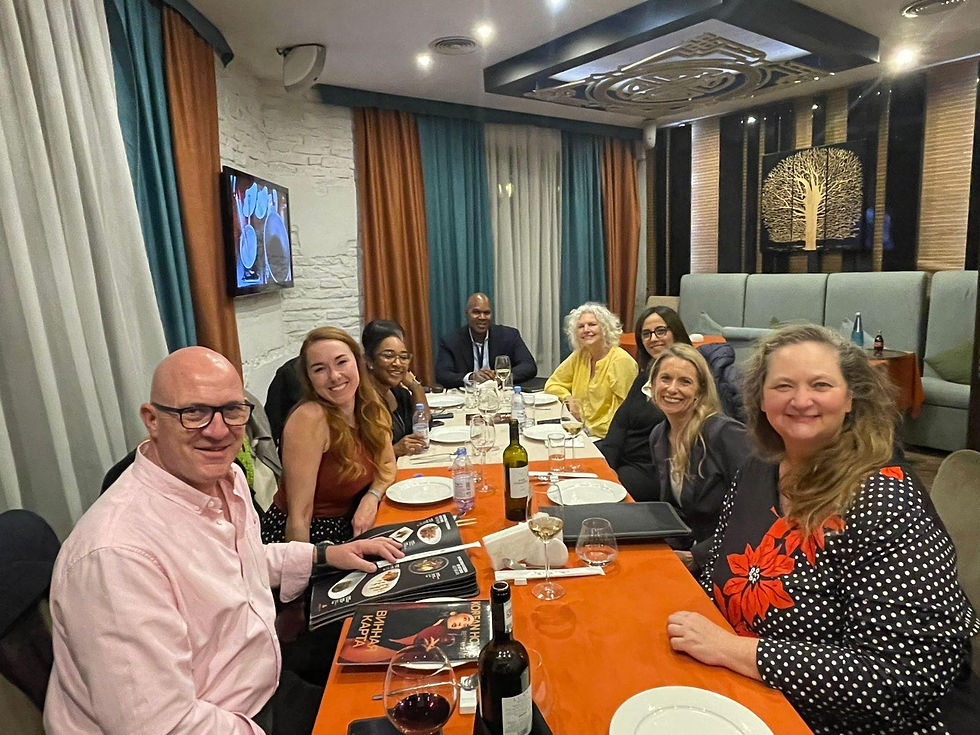
One of the most special parts of the Congress was discovering strong representation from the South West - only three of us South of Bristol (to my knowledge!) It was wonderful to connect with Paul Bray from Cornwall and fellow Devon dweller Caroline Hall.
Caroline delivered a passionate and deeply moving talk on trauma-informed practice and the importance of meeting children exactly where they are that day. Her message really resonated with me. Inclusion starts with empathy, presence, and flexibility. It is about seeing the child in front of you, not the behaviour or the label, and responding with compassion
Both Caroline and Paul reminded me of the depth of knowledge and passion we have in the South West. Their work embodies what inclusion should look and feel like: authentic, relational, and deeply human. It is amazing to travel all the way to Kazakhstan and still find kindred spirits from home.
It was also fantastic to meet the energetic, and fantastically authentic, Liz Jones, who previously worked in Plymouth and now works in Europe, educating professionals on how technology can make our lives and the lives of those we work with easier and more inclusive. Liz’s practical and empowering approach really struck me. She is a brilliant example of how innovation and accessibility can go hand in hand! Everyone should meet her if they can… (but you should not ask her about her age unless you have a spare 45 minutes to spare…haha!)
Believing in Equity
One of the things I keep coming back to is how strongly I believe in equity, not equality. The children I work with deserve the same chances and opportunities, but that doesn’t mean treating everyone the same. Their different ways of thinking, processing, and experiencing the world mean they are likely to be the engineers, creatives, and world changers of tomorrow.
Hearing Daniel Sobel speak was incredibly inspiring. He shared his own experience of being neurodivergent and reminded us that many experts are where they are because they innovate, take risks, and fully believe in their mission. He pointed out that some of the most successful people in the world are neurodivergent, which ties beautifully into James Kavanagh’s discussion about reframing neurodivergence as a strength rather than a deficit.

I do not see my ADHD as a bad thing. Many of the parts of me I love most are linked to ADHD traits – my creativity, curiosity, energy, and willingness to take on new challenges. Being neurodivergent has shaped my approach to teaching, dance, and inclusion in ways I wouldn’t change for the world.
Emotionally Available Schools
Another highlight was meeting Roger Mitchell and learning about his remarkable Emotionally Available School. Roger focuses on creating environments where emotional wellbeing is at the heart of learning, where children are not only supported academically but are truly seen, heard, and held emotionally.
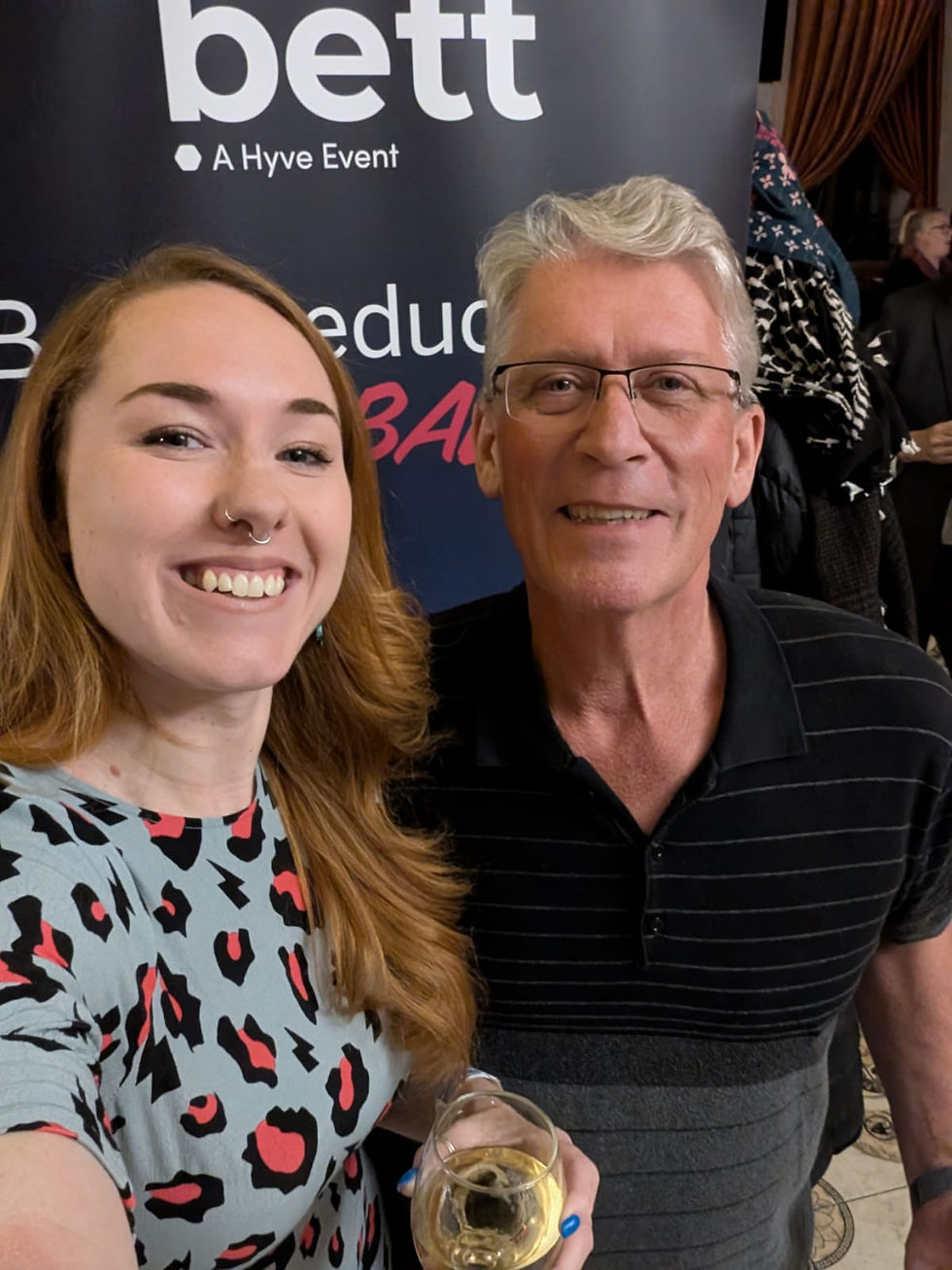
His philosophy aligns closely with my own values around inclusion and relational practice. We spoke at length about how emotional safety underpins every aspect of learning, and I was genuinely honoured when Roger invited me to visit his school. It is exactly the kind of nurturing, human-centred education the world needs more of.
Meeting Roger felt like reconnecting with an old friend. His warmth, insight, and genuine care for his students left a lasting impression.

The Impact of Technology and Safeguarding Young Minds
A particularly thought-provoking session was led by Jess and the team from The John Wallis Academy & Highworth Grammar School in Kent, exploring the impact of smartphones and technology on children's education and well-being.
Jess, a secondary drama teacher, was truly inspirational. Her talk challenged conventional ideas about AI and tech in schools and its effects on young people, from early years to adulthood.
What really struck me was looking around the room during her presentation and seeing how many of the university students (local to Almaty) were on their phones. It highlighted the pervasive nature of this issue globally.

Her research, which has led to a published book, showed a deep understanding of the challenges our young people face, and it was great to connect with someone who so clearly 'gets it.' This work being done to safeguard our young people's mental health is incredibly important, and it reinforced my own commitment to thoughtful, ethical approaches to learning.
Global Connections
One of the most powerful parts of the Congress was hearing from practitioners from across the world, from the UK and Europe to Egypt, Australia, and beyond, and realising how deeply our goals are aligned. Despite differences in culture or context, the drive to create a more inclusive world is universal.
We all share the same hope: to make inclusion meaningful and accessible for everyone, regardless of background, ability, gender, or circumstance. Listening to so many perspectives reminded me that inclusion is not just an educational concept, it is a shared human value.
Beyond the educational sphere, I also had the joy of connecting with incredible people from the wider business and government world. I met Chyngyz Sher, President of the China-Eurasian Business Council, and was invited to a Google event. It was truly invaluable to learn about how inclusion looks at the business and government level, and to see how many parallels there are with working with children. The principles of creating accessible, supportive, and effective environments really translate across sectors.

Beyond Education
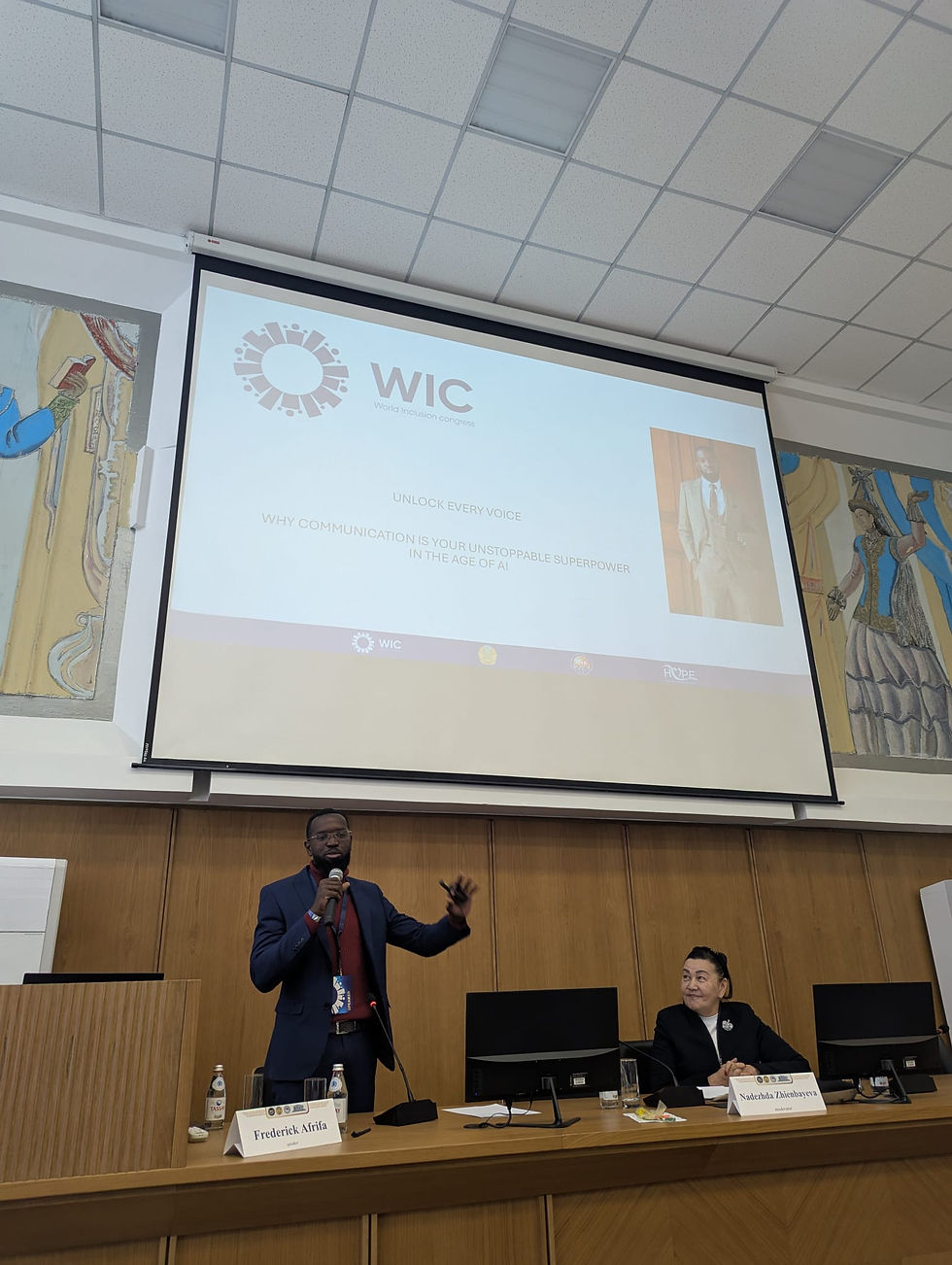
I also had the joy of connecting with incredible people outside the education world. Meeting Frederick Afrifa, whom many will recognise from The Apprentice, was fantastic. His presentation on the power of communication and overcoming barriers was personal and powerful.
I also learned a lot from Amri Johnson, whose work focuses on making corporate environments more inclusive. Hearing him talk about his approach and his clear love for his family reminded me that inclusion is as much about empathy and connection as it is about policy and structure.
My Journey in Inclusive Dance
Attending the Congress reminded me of my own journey in inclusive education through dance. I co-directed the community dance company Moving Together in Leicester, where I delivered outreach dance and Arts Award programmes for The Curve Theatre and across the David Ross Education Trust. Working with children from a wide range of backgrounds, abilities, and experiences, I have always seen dance as a tool for empowerment, connection, and raising awareness.
Working with Plymouth Dance and Exim Dance Company, I have continued to see how creative practice can build bridges across communities. Dance became a space where everyone belonged, and that philosophy now sits at the core of my teaching and advocacy.
Bringing together my background in occupational therapy, dance therapy, neuroscience, and my own lived experience of ADHD, I have developed a personal approach to working with children that is rooted in empathy, empowerment, and understanding. Attending the Congress has made me more certain than ever that I want to share this approach more widely to help others create learning spaces that truly celebrate difference.
What I’m Taking Forward
While contributing to the White Paper that will go to the United Nations next year is an incredible honour, the biggest takeaway for me was more personal.
The Congress has been a journey of self-discovery, helping me realise the importance of my own voice, the value of lived experience, and the power of integrity in advocacy. I have been reminded that expertise is not always about titles or qualifications but about curiosity, compassion, and commitment to lifelong learning.
Most importantly, I have come away filled with gratitude for being part of a global community of people who care so deeply about creating a fairer, more inclusive world.
This is only the beginning. I feel re-energised, inspired, and ready to keep pushing forward for our children, our communities, and for inclusion in all its forms.
Watch this space.


Comments